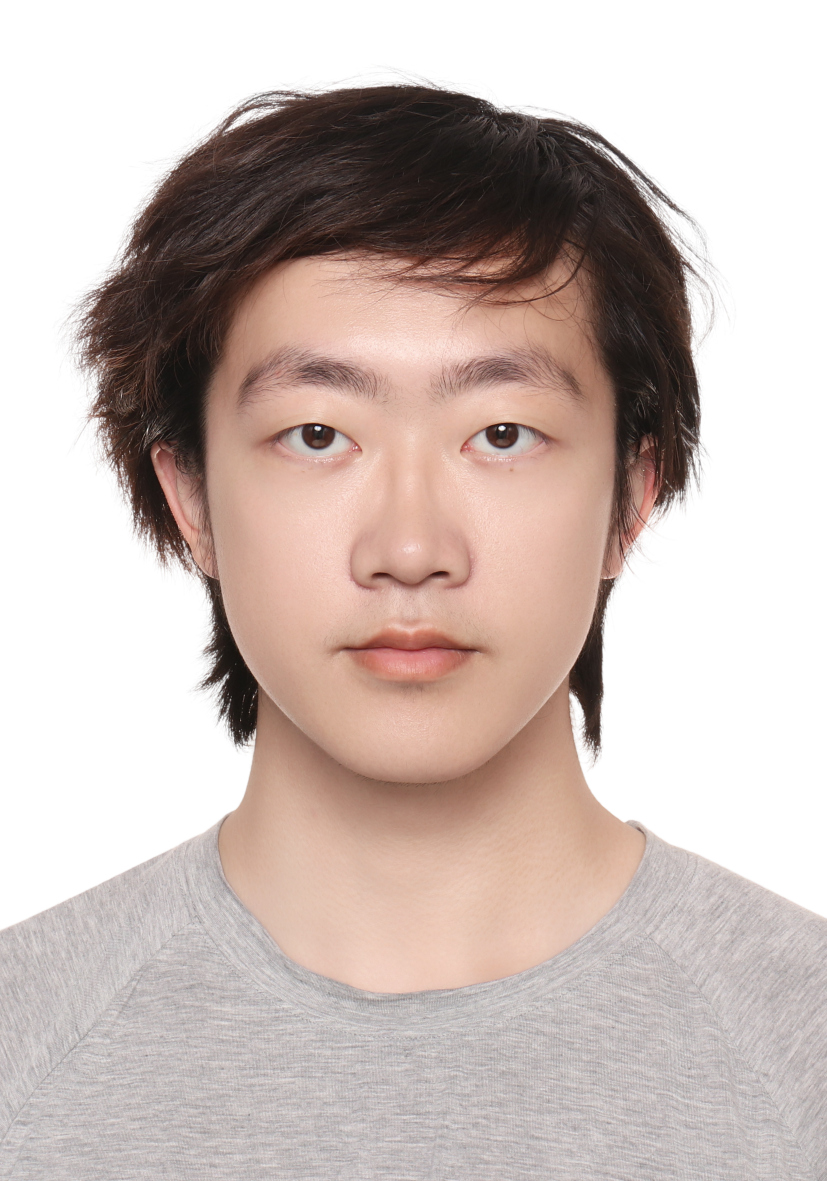
Haoxuan Sun
M.S. in Computer Science, Vanderbilt University
I am a first-year master's student at Vanderbilt University supervised by Prof. Soheil Kolouri for my master's thesis. My research focuses on world models — with a particular interest in their intersection with procedural content generation (PCG) for games — studying how dynamic world modeling can inform the authoring of interactive environments. I am broadly interested in generative models, reinforcement learning, and AI for games. I am actively seeking PhD positions starting Fall 2027.
Research Interests
World Models
Modeling dynamic world evolution and generating interactive environments for games and simulations.
Procedural Content Generation
AI-driven game level and world generation conditioned on player behavior and designer constraints, with a focus on online and sequential authoring.
Generative Models
Diffusion and autoregressive models for structured and controllable content generation, particularly in interactive and sequential settings.
Reinforcement Learning
RL for controllable content generation and agent policy learning within world models.
Selected Projects
Scrollweaver
Scrollweaver frames game world generation as online sequential authoring conditioned on player behavioral trajectories and designer constraints. Unlike static one-shot generation approaches, Scrollweaver models the dynamic co-evolution of game worlds and player interactions over time, enabling game worlds that adapt to how each player actually plays.
AIGC Detector Robustness
Studied the adversarial robustness of AI-generated face detection systems. Proposed an adversarially trained variant of DIRE (a diffusion reconstruction residual-based detector), robust under offline threat models where the attacker is unaware of the reconstruction step. Ongoing work addresses the online white-box setting, where the attacker has full pipeline access and can compute end-to-end gradients, and develops new defenses under this stronger threat model.
PPG-to-ECG Cross-Modal Generation
Developing generative models that translate photoplethysmography (PPG) signals into electrocardiogram (ECG) waveforms beat-by-beat. The method models the translation as a causal temporal process: each cardiac cycle is a time step, and a state-space model propagates history across cycles so that each generated beat depends on past PPG and ECG context, with RR intervals encoding irregular beat durations. A flow matching generator produces the waveform within each cycle.
Publications
Robustness in AI-Generated Detection: Enhancing Resistance to Adversarial Attacks
arXiv preprint, 2025
Education
M.S. in Computer Science
Vanderbilt University
2025 – Present
B.S. in Artificial Intelligence
Shanghai Jiao Tong University(SJTU)
2020 – 2024